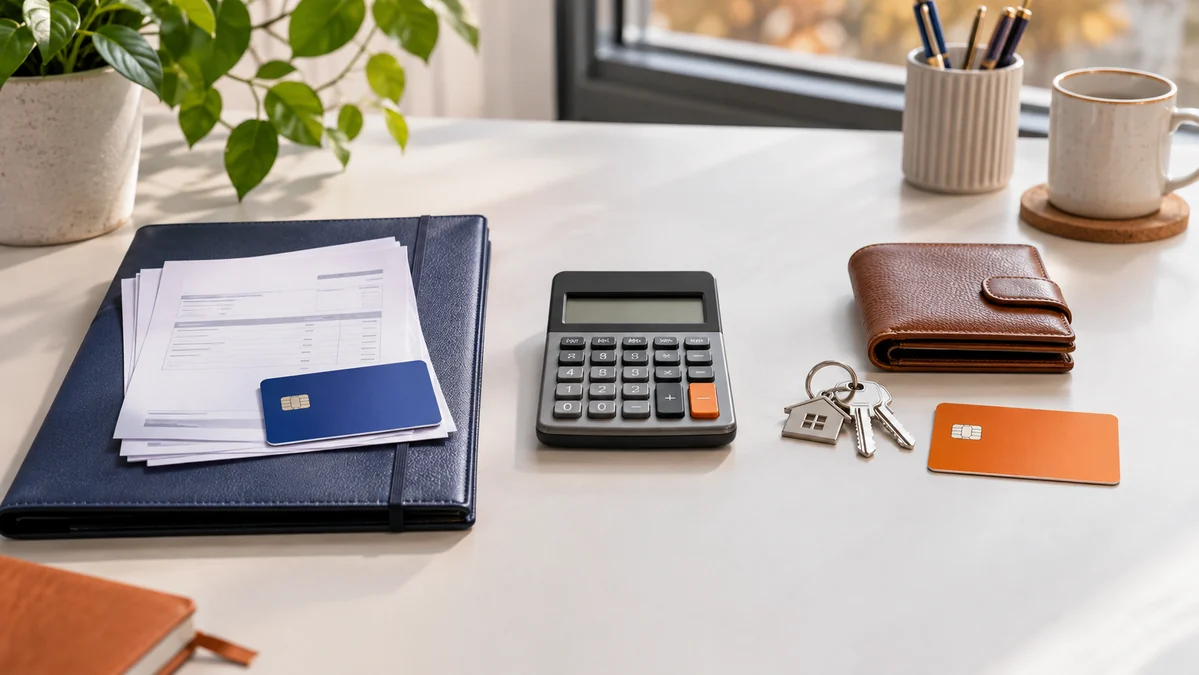
Company money does not become the owner’s personal money, even if they are the sole shareholder of an OÜ. In practice, however, it is easy to mix up expenses: pay for a purchase with the company card, transfer money to yourself or cover business costs out of your own pocket. Here are five common situations and how to document them correctly and avoid unnecessary tax.
Why company money cannot simply be spent on personal needs
An OÜ (private limited company) is a separate legal entity with its own assets and liabilities. The owner can manage company funds within their authority, but payments for personal use require a lawful basis.
An owner can receive money from an OÜ in the following ways:
- Salary or management board member’s remuneration. The taxes required by law must be calculated on these payments.
- Dividends. These are paid from profit by a resolution of the shareholders. In 2026, the company pays income tax on dividends at a rate of 22/78.
- Expense reimbursement. If the owner pays for a business purchase with personal funds, the OÜ can reimburse the expense if supporting documents are available.
- Loan repayment. If the owner previously lent money to the company, it can repay the principal without additional tax, provided the loan is properly documented.
You cannot pay for personal purchases from the OÜ’s account merely because you own the company. Under the Income Tax Act (Tulumaksuseadus, TuMS), expenses unrelated to business are subject to income tax at a rate of 22/78. Payments classified as fringe benefits are subject to additional tax rules.
Five situations: how to document expenses and transfers correctly
1. You paid for a personal purchase with the company card
Imagine accidentally using the company card instead of your personal card in a shop. The purchase has nothing to do with the business, but the money has already left the company account.
What should you do? Repay the amount to the company’s account and tell your accountant so that the transaction can be recorded correctly.
If the money is not repaid, the company may have to pay tax. The type of tax depends on who received the benefit and how the purchase was documented. Read more in “Taxation of non-business expenses in Estonia”.
2. You bought something for the company with personal money
Suppose you bought a work laptop with your own money. The company can reimburse the purchase price if the laptop is genuinely needed for business and the expense is supported by documents.
Ask the seller to issue the invoice to the OÜ, including its name and registry code. Give your accountant the invoice and proof of payment.
If the company is registered for VAT, your accountant will check whether input VAT can be deducted. This depends both on the invoice and on how the purchase is used in the company’s business.
3. You transferred company money to yourself “until payday”
The owner urgently needed money and transferred it from the OÜ’s account to their personal account. However, company money cannot simply be borrowed “until payday”: the transfer must have a lawful basis.
If it is an advance on salary or remuneration, the payment must be documented correctly and the applicable taxes calculated. If there is no basis for the transfer, the money should be returned to the company.
You cannot simply label such a transfer a loan after the event. First, check whether the law permits a loan to that recipient and whether the documentation reflects the actual transaction.
4. You want to borrow money from your own OÜ
A standard agreement is not enough if the recipient is subject to a statutory prohibition. Restrictions apply to loans from an OÜ to its shareholders and members of its governing bodies.
Under § 159 of the Commercial Code (Äriseadustik, ÄS), an OÜ must not grant a loan:
- to a shareholder whose holding represents more than 5% of the company’s share capital;
- to a member of the company’s management board or supervisory board;
- to other persons in the cases specified by law.
A loan granted in breach of this prohibition is void, meaning it is invalid from the outset. Exceptions exist for certain transactions within a group, but they generally do not apply to the ordinary owner of a small OÜ.
If you need money from your OÜ, discuss other lawful payment options with your accountant: salary, management board remuneration, dividends or repayment of a loan you previously made to the company. Each option has its own conditions and tax consequences.
5. You put your own money into the company
Now consider the opposite situation: the OÜ needs money to buy goods, pay rent or cover other expenses, and you transfer funds from your personal account.
There are two common options:
- A loan to the company. You lend money to the OÜ under a loan agreement, and the company undertakes to repay it on the agreed terms. Repayment of the principal itself is not subject to income tax. If interest is payable, its tax treatment must be considered separately.
- An equity contribution. Money is contributed to the company’s equity in accordance with the necessary corporate procedures. The rules for subsequently returning these funds differ from those for repaying a loan.
Document the transfer immediately. This makes it clear why the company received the money and how it may be returned to the owner.
How much tax a personal expense can cost the company: an example
Example. An OÜ paid €1000 for its owner’s family holiday. The owner did not repay the money to the company.
If the payment is classified as a non-business expense, the income tax is:
€1000 × 22/78 = €282.05
If the payment is instead treated as a fringe benefit (erisoodustus) provided to a management board member, the company must also pay social tax:
- Income tax: €282.05.
- Social tax: (1000 + 282.05) × 33% = €423.08.
- Total tax: €705.13.
If the holiday payment is classified as a fringe benefit, the company’s total cost is €1705.13: €1000 for the holiday and €705.13 in tax.
For comparison, if the company lawfully pays the owner €1000 in dividends, income tax at a rate of 22/78 is also €282.05. Dividends, however, require distributable profit and a shareholders’ resolution. A personal purchase cannot simply be treated as a dividend without the appropriate formalities.
If tax is not declared and paid on time, interest may be charged on the arrears at 0.06% per day. In certain cases involving serious breaches, a management board member may also be personally liable for the company’s tax debt. Read more in “OÜ tax debt: when a board member’s personal assets are at risk” and “Company tax debt in Estonia”.
How to keep personal and company money separate
A few rules help avoid unnecessary questions in bookkeeping and tax inspections:
- Use separate cards. Pay for personal purchases with your personal card and use the company card for business expenses.
- State the basis of every transfer. For example, “salary for March” or “loan repayment under the agreement”. The payment reference must reflect the actual transaction and its supporting documents.
- Keep invoices and receipts, especially when a purchase is paid for with personal money and the company needs to reimburse it.
- Send documents to your accountant promptly. Do not leave expense documentation until the end of the year: the longer you wait, the harder it becomes to establish the circumstances of a purchase or transfer.
- Check uncertain transactions before paying. If you plan to transfer money between your personal account and the OÜ’s account, or buy something for both business and personal use, clarify the rules first.
If you are unsure whether a purchase can be paid for from the OÜ’s account or whether you can transfer money to yourself, consult your accountant in advance. They can check the documents and help record the transaction correctly.
For more on the documents required for bookkeeping, read “What documents to give your accountant in Estonia”.
Frequently asked questions
Can I pay for lunch with a client using the company card?
Yes, if the meeting is genuinely connected with the company’s business. Such costs are usually treated as representation expenses. A tax-free limit applies, and any excess is taxable. Keep the receipt and record who attended and the business purpose of the meeting.
I have already transferred company money to myself without a basis. What should I do?
Do not leave the transaction undocumented. Tell your accountant the amount, date and reason for the transfer. If there was no lawful basis for the payment, the money should be returned to the company. If the transfer was in fact remuneration or another permissible transaction, its documentation and tax treatment need to be checked. Do not invent a payment purpose after the event.
How Finance PRO helps control company expenses
Finance PRO has provided accounting services in Estonia since 1998. We monitor expense documentation, check supporting records and pay attention to transfers between the company and its owner.
If personal and business expenses have already become mixed, we can help review the transactions, assess tax risks and identify what needs to be corrected.
A second specialist checks each accountant’s work, while a coordinator monitors reporting deadlines. This helps identify mistakes in time and keep the accounts in order.
Unsure whether your expenses and transfers have been documented correctly? We can help you understand the situation and decide where to start. The initial assessment is free.
Phone: +372 5366 6674
Email: info@fpro.ee
Find out more about our accounting services in Estonia.
Read also
- Taxation of non-business expenses in Estonia
- OÜ tax debt: when a board member’s personal assets are at risk
- What documents to give your accountant in Estonia
Information current as of 16 November 2026. The calculation is illustrative: tax consequences depend on the circumstances of the particular transaction. This article provides general information and does not replace individual accounting or tax advice. Your situation may differ — contact us.