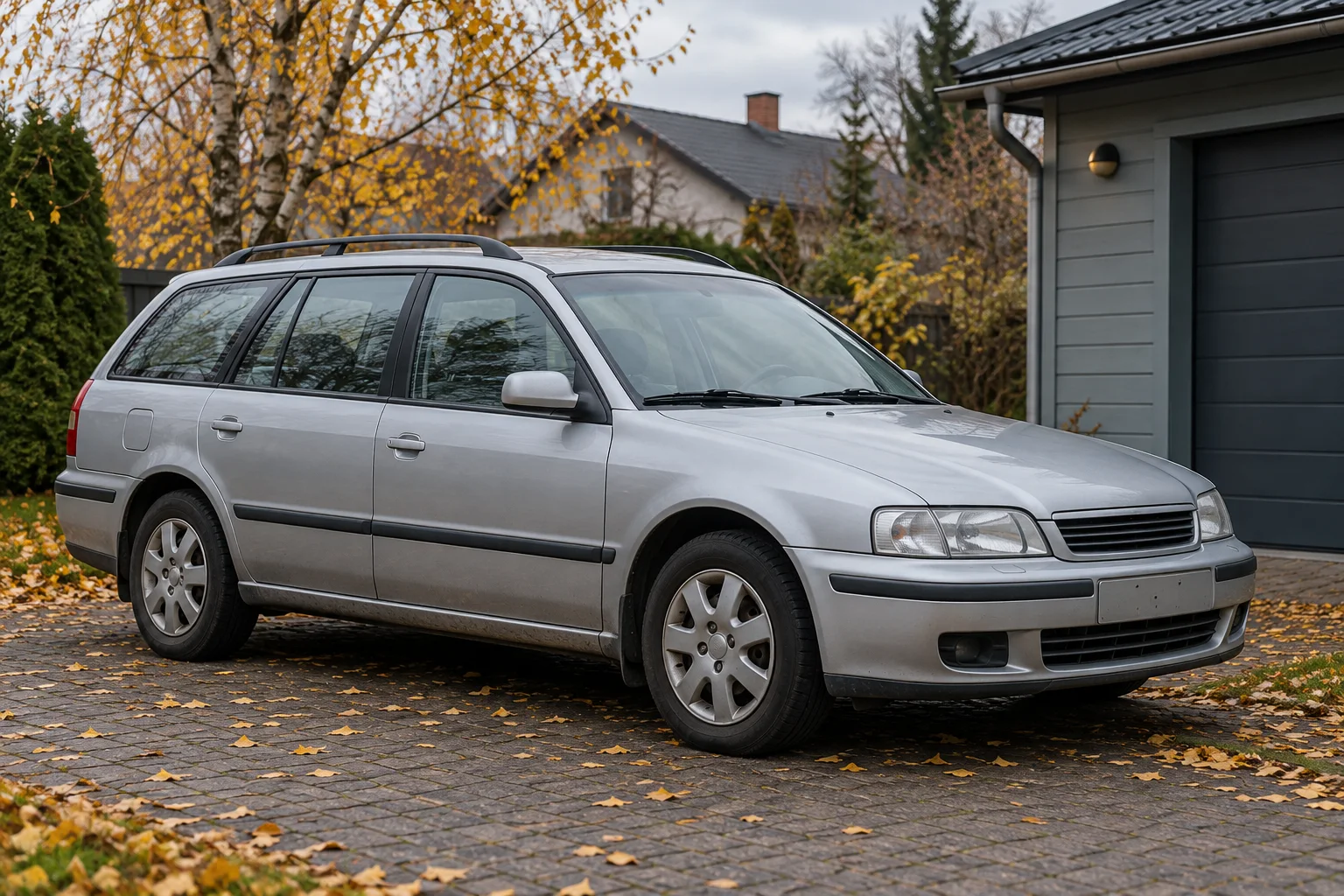
From 1 January 2027, Estonia will also charge vehicle tax on cars with suspended registration entries. Even if a car has not been used for years or no longer exists, its entry in the traffic register may lead to unnecessary costs.
A car that no longer exists can be removed from the register without a certificate of destruction for €15 until the end of 2026. From 2027, the state fee for this procedure will rise to €800.
Here is which cars are affected, what will happen on 1 November and what to do by 31 December.
What changes in 2027
Estonia introduced vehicle tax in 2025. Cars with suspended registration entries are currently exempt.
A registration entry may remain suspended for years. For example, an owner may have stopped using a car, taking it for roadworthiness inspections or arranging motor insurance. Sometimes the car itself no longer exists, but it is still registered in the owner’s name. Such vehicles are often called phantom cars.
This exemption ends on 1 January 2027. The Motor Vehicle Tax Act expressly includes “a motor vehicle with a suspended registration entry” among the vehicles subject to tax. This provision takes effect on 1 January 2027.
The vehicle tax notice is issued in e-MTA by 15 February. The tax is paid in two instalments, due on 15 June and 15 December.
Which cars will be removed automatically on 1 November
On 1 November 2026, the Transport Administration plans to remove vehicles whose registration entries had been suspended for more than seven years as at 1 July 2026.
According to the Transport Administration, there were 155,230 vehicles with suspended entries in the register on 22 October. Of these, 82,115 are scheduled for automatic removal on 1 November. The remaining approximately 73,000 vehicles may stay in the register. Unless their owners change their registration status, vehicle tax will apply to them from 2027.
Automatic removal may resolve the issue for owners whose cars no longer exist. However, if you still have the car and intend to use it, check its status: once permanently removed, it will have to be registered again.
If the registration entry has been suspended for less than seven years, the car will not be removed automatically. It will remain in the register and become subject to vehicle tax from 2027.
How much a delay could cost
For a passenger car more than 20 years old, annual vehicle tax is €50: only the base component applies. For newer cars, the amount depends on the vehicle’s characteristics and may be higher.
Example. A passenger car in category M1, first registered in 2004, is still listed in its owner’s name even though it no longer exists. A car’s age is calculated from its first registration date. This vehicle does not qualify for automatic removal. Let us compare the cost of removing it in 2026 and in 2029.
| Cost | Remove in 2026 | Remove in 2029 |
|---|---|---|
| Removal without a certificate of destruction | €15 | €800 |
| Vehicle tax for 2027–2029 | €0 | €150 |
| Total | €15 | €950 |
The difference in this example is €935. The calculation assumes that the car will not be removed automatically and will remain in the register until 2029. The actual amount depends on the vehicle and the removal date.
What to do by 31 December 2026
1. Check the vehicles listed in your name
Log in to the Transport Administration’s e-service and check which vehicles are registered in your name. Identify those with suspended entries and those you have not used for a long time.
Your next steps depend on whether the car still exists and whether you want to keep it.
2. Choose the appropriate option
“The law provides three options: restore the registration entry, temporarily remove the vehicle from the register, or hand it over to a waste treatment operator,” explains Martin Meltsas, a service manager in the Transport Administration’s vehicle registration department.
The car no longer exists. If the car has been destroyed, lost or missing for a long time, remove it from the register without a certificate of destruction. The state fee is €15 until the end of 2026 and €800 from 2027. This procedure is available for passenger cars and small vans in categories M1 and N1 if they have no valid roadworthiness inspection and have not undergone a periodic inspection within the last two years. See the conditions on the Transport Administration’s website.
If the car was sold but the sale agreement has not been retained, it can also be removed through the e-service.
You still have the car, but no longer need it. Hand it over to an authorised dismantling company. It will be removed from the register without a state fee. A list of companies and collection points is available from the Transport Administration.
You still have the car and want to keep it. Temporarily remove it from the register for 1 to 24 months. The fee is €15. The easiest way is through the Transport Administration’s e-service, where a dedicated application lets you prove that the car still exists. You can also visit a service bureau.
Keep track of the expiry date. Once the period ends, the registration is automatically restored and vehicle tax starts accruing again.
You intend to use the car. If it has not yet been permanently removed, restore its registration: complete a roadworthiness inspection and arrange compulsory motor insurance. Vehicle tax will then apply under the general rules.
If the car is registered to a company
The company pays the vehicle tax. Before the end of the year, compare two lists: vehicles registered to the company with the Transport Administration and vehicles recorded as assets in its accounts.
If a car no longer exists but is still listed in the accounts, tell your accountant. They will remove it from the accounting records so that the annual report reflects only the assets the company actually has.
Vehicle tax and company accounting
A company car involves more than annual vehicle tax. Its purchase, running costs, depreciation, sale or write-off must also be recorded correctly.
If the car is also used for private journeys, additional taxes apply.
Read more in “A company car in Estonia: three options and their taxes”.
Need to check your company’s vehicle records?
Finance PRO accountants can help reconcile accounting records with supporting documents, identify discrepancies and prepare the changes needed for the annual report.
We provide accounting services in Estonia and help business owners with accounting and tax matters. The initial assessment is free.
Phone: +372 5366 6674
Email: info@fpro.ee
Learn more on the Finance PRO accounting services page.
Information current as at 30 October 2026. This article is for information only and does not replace individual tax or legal advice.